Islam
Definition
Islam refers to the specific philosophy of the Muslims, a monotheistic and unitarian belief system declared by Muhammad in 610 AD and described in the book known as the Qur'an.
Keywords: Islam, Philosophy, Unitarianism, False, Veracity.
Veracity
Islamic claims are false .
Proof
Islam is a form of unitarianism.
Premise 1: All unitarian philosophies are false.
Premise 2: Islam is a unitarian philosophy.
Conclusion: Therefore, Islam is false.
Since unitarian claims are false, Islam is also false.
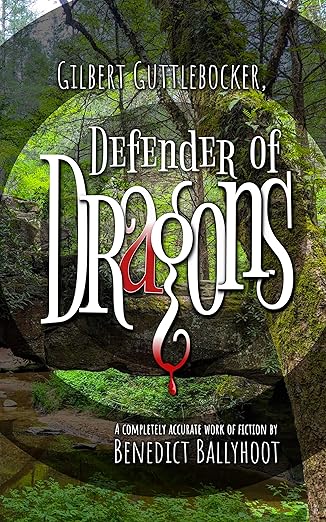
Gilbert Guttlebocker, Defender of Dragons
Riveting, yet absurd; romantic, yet innocent; Gilbert Guttlebocker, Defender of Dragons is a little Roald Dahl, a little Harry Potter, and a little Chronicles of Narnia, all rolled into one. Timothy McCabe collaborates with the great Benedict Ballyhoot to bring you the novel of the century!
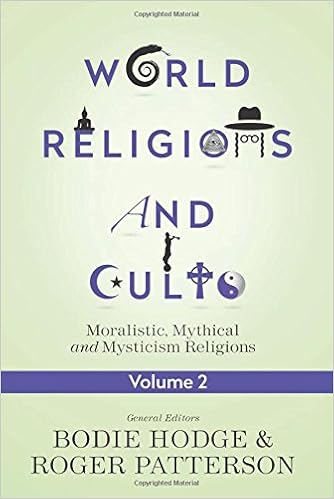
In Printed Form
Along with numerous other authors including Don Landis, Bodie Hodge and Roger Patterson, Timothy McCabe contributes analyses of various world religions and cults in this volume from Master Books.
Other Writings
Empiricism is false: a simple proof
Empiricism describes any philosophy which claims that all knowledge originates in experience, denying the validity of both deductive reasoning and divine revelation.
Continue reading...
"Why am I here? Why do I exist? What is my purpose?"
According to Christ, the greatest commandment is to "love the Lord your God with all your heart, with all your soul, with all your mind, and with all your strength" (Mark 12:30). As our greatest command, it is the thing we most ought to do. We exist to love God. How are we to love God? What exactly does that mean? The apostle John tells us that love for God is to obey Him (1 John 5:3).
Continue reading...
"Brian Dunning from skeptoid.com claims that there is no record of a mass Exodus of Jewish slaves out of Egypt. Is this true?"
No. This is not even remotely the case. This would be true only if we were to throw out all record that we have of the exodus of Jews from Egypt, as Brian Dunning seems to do. Let's take a look at some of his outrageous claims. The statement in question comes from an essay on skeptoid.com entitled "Did Jewish Slaves Build the Pyramids?" PRESUPPOSITIONS Mr.
Continue reading...