Philosophy and Proofs
Atheism
Atheism includes any philosophy which claims that no God or gods exist, including any rational or reasoning creator of the universe.
Read more
Christianity
Christianity is the philosophy that claims that Jesus of Nazareth is the Son of God and Jewish Messiah (or Christ); that he was crucified, died and was buried, and rose again three days later; that his death was an atoning sacrifice for the sins of his followers; and that placing one's trust in Jesus is how any sinful person can be forgiven and made righteous before their creator.
Read more
Empiricism
Empiricism describes any philosophy which claims that all knowledge originates in experience, denying the validity of both deductive reasoning and divine revelation.
Read more
Islam
Islam refers to the specific philosophy of the Muslims, a monotheistic and unitarian belief system declared by Muhammad in 610 AD and described in the book known as the Qur'an.
Read more
Monotheism
Monotheism refers to any philosophy which claims that there is only one supreme creator of the universe.
Read more
Open Theism
Open theism refers to any philosophy which claims that there is a supreme creator of the universe who does not foreknow the outcome of human choices.
Read more
Pantheism
Pantheism denotes any philosophy which claims that god and the universe are identical.
Read more
Polytheism
Polytheism refers to any philosophy which claims that there are multiple supreme creators of the universe.
Read more
Rationalism
Rationalism describes any philosophy that claims that beliefs and opinions should always be logical, deductive conclusions rather than being based on experience, observations, religious teachings, or divine revelation.
Read more
Theism
Theism includes any philosophy which claims that some kind of God or gods exist.
Read more
Trinitarianism
Trinitarianism is the philosophy that there is only one God in terms of essence or being; and that the one God is revealed through three eternally distinct persons, specifically, the Father, the Son (Jesus of Nazareth), and the Holy Spirit. Trinitarianism is unique to Christianity.
Read more
Unitarianism
Unitarianism refers to any philosophy which claims that divine sovereignty is not shared in any way.
Read more

Gilbert Guttlebocker, Defender of Dragons
Riveting, yet absurd; romantic, yet innocent; Gilbert Guttlebocker, Defender of Dragons is a little Roald Dahl, a little Harry Potter, and a little Chronicles of Narnia, all rolled into one. Timothy McCabe collaborates with the great Benedict Ballyhoot to bring you the novel of the century!
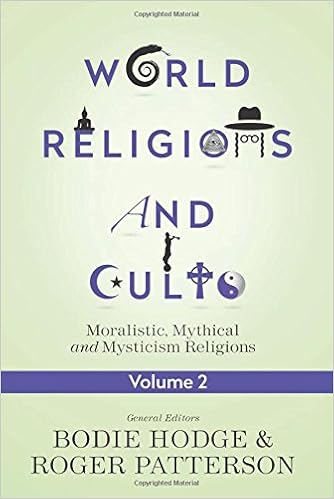
In Printed Form
Along with numerous other authors including Don Landis, Bodie Hodge and Roger Patterson, Timothy McCabe contributes analyses of various world religions and cults in this volume from Master Books.
Other Writings
"If everything was created by God, was Buddha also created by God? Buddha actually denied the existence of a single being that dominates/governs the whole world. Did Buddha go to hell for denying his existence?"
Siddhartha Gautama, or Buddha, was created by God, yes. Everyone who is not God was created by God (Genesis 1:27; Ecclesiastes 7:29; Isaiah 46:9), and God cannot lie (Titus 1:2; Hebrews 6:18), and is never wrong (Colossians 2:3; John 21:17; 1 John 3:20). If Buddha claimed there is no ultimate creator God, then either he was wrong or he was lying, thereby identifying himself as not-that-god, since God cannot lie and is never wrong.
Continue reading...
"Can you conceive of any specific thing that, if it happened, would cause you to change your position on the God issue? If so, what is it? If not, then why not?"
No. I could certainly modify my positions on specific minor issues if it were demonstrated to me that scripture, or plain logic not contradicting scripture, were opposed to my views. But that would be it. My worldview will not change because I know Jesus. When you know someone, you know that you know them. People can try their hardest to convince you that you don't, but you do. I know Christ and I recognize the work of the Holy Spirit in me (John 10:27, 14:26).
Continue reading...
"If the book of Genesis is not to be taken literally, why did god send himself in human form to die in order to save us from a symbolic sin committed by metaphorical characters (Adam and Eve) who never existed?"
The Apostle Paul compares Jesus to Adam in the book of Romans, chapter 5, verses 12-21, and in such a fashion that if Adam were not a real man, one would have to conclude that Christ were not either. In Luke 3, the "beloved physician" Luke provides a Genealogy of Jesus including his step-father Joseph, King David, his father Jesse, Boaz (husband of Ruth), Judah, Jacob, Isaac, Abraham, Shem, Noah, Seth, and (yes) Adam.
Continue reading...