Rationalism
Definition
Rationalism describes any philosophy that claims that beliefs and opinions should always be logical, deductive conclusions rather than being based on experience, observations, religious teachings, or divine revelation.
Keywords: Rationalism, Philosophy, Logical, Reasoning, Deductive, Experience, Observations, Religious, Revelation, Contradictory.
Veracity
Rationalistic claims are false .
Proof
All self-refuting or contradictory claims are deductively false.
Premise 1: Only deductive conclusions should be believed.
Premise 2: Premise 1, being the foundation or starting point of the philosophy, is not itself a deductive conclusion.
Conclusion: Therefore, premise 1, also known as "rationalism", should not be believed.
Rationalistic claims, when adhered to, require the rejection of rationalistic claims. To accept them is to reject them, making rationalism inherently contradictory and deductively false.

Gilbert Guttlebocker, Defender of Dragons
Riveting, yet absurd; romantic, yet innocent; Gilbert Guttlebocker, Defender of Dragons is a little Roald Dahl, a little Harry Potter, and a little Chronicles of Narnia, all rolled into one. Timothy McCabe collaborates with the great Benedict Ballyhoot to bring you the novel of the century!
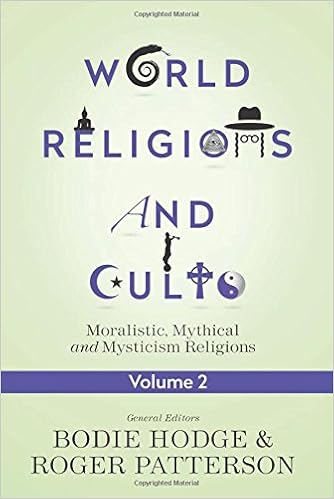
In Printed Form
Along with numerous other authors including Don Landis, Bodie Hodge and Roger Patterson, Timothy McCabe contributes analyses of various world religions and cults in this volume from Master Books.
Other Writings
"If EVERYTHING in the Bible is Gospel truth, then which is true? John Ch.18 V.9 or John Ch.17 V.12?"
I'm afraid I don't understand your question. These two verses say the same thing. In fact, the verse in John 18:9 is a direct reference to the message also contained in John 17:12. Here are the verses: John 17:12 (Christ is speaking to the Father) "While I was with them, I was keeping them in Your name which You have given Me; and I guarded them and not one of them perished but the son of perdition, so that the Scripture would be fulfilled.
Continue reading...
"Can justice be done using punishment of infinite nature for a transgression of finite nature?"
Ultimately there is no other way to do it as long as we are the ones paying the price. In the end, it all comes down to a simple math problem. If God grants me 80 years to serve Him with, and I only serve Him for 79 of those years, then I owe God one year of service: 80 - 79 = 1 If I insist on paying God back rather than accepting His offer of forgiveness through Christ, how will I pay Him back for the one year in which I did not serve Him perfectly?
Continue reading...
"Honest answer: is your world view determined by knowledge or by belief?"
The short answer is that all of our worldviews, yours and mine and everyone's, are determined by God (Romans 9:18; Ephesians 1:11). But I suppose this answer then leads to the question, "what method did God use to cause you to have the worldview you have... did He do it by giving you knowledge or by causing you to believe apart from knowledge?" The Bible teaches that we all have a knowledge of some basic theological truths. Namely, we all know that there is a God.
Continue reading...