Christianity
Definition
Christianity is the philosophy that claims that Jesus of Nazareth is the Son of God and Jewish Messiah (or Christ); that he was crucified, died and was buried, and rose again three days later; that his death was an atoning sacrifice for the sins of his followers; and that placing one's trust in Jesus is how any sinful person can be forgiven and made righteous before their creator.
Keywords: Christianity, Jesus, Philosophy, Messiah, Christ, God, Crucified, Sacrifice.

Gilbert Guttlebocker, Defender of Dragons
Riveting, yet absurd; romantic, yet innocent; Gilbert Guttlebocker, Defender of Dragons is a little Roald Dahl, a little Harry Potter, and a little Chronicles of Narnia, all rolled into one. Timothy McCabe collaborates with the great Benedict Ballyhoot to bring you the novel of the century!
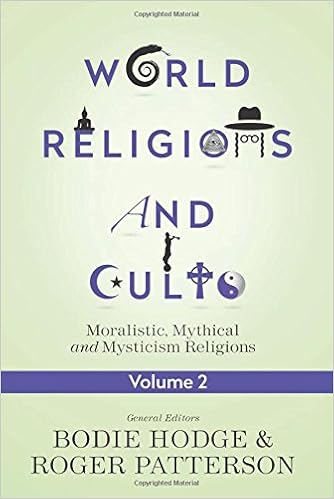
In Printed Form
Along with numerous other authors including Don Landis, Bodie Hodge and Roger Patterson, Timothy McCabe contributes analyses of various world religions and cults in this volume from Master Books.
Other Writings
"Jesus explicitly says "Many will say to ME (Jesus) LORD LORD, on that day... and I will say to them Depart from here ye that work iniquity" Full context Matthew 7:21-23. What is the Christian's response?"
I'm sorry, but response to what, exactly? I'm really not sure what you are looking for in your question. Here is the full verse and a little more context: Matthew 7:21-27 (NASB) "Not everyone who says to Me, 'Lord, Lord,' will enter the kingdom of heaven, but he who does the will of My Father who is in heaven will enter.
Continue reading...
"In Romans 1:23, God clearly says "you have brought down the image of the uncorruptible God to corruptible man". How then can you call Jesus God?"
This question is a continuation of an earlier question, linked to at the bottom of my answer. The question was asked in several parts, so I have compiled all of the questions together here, and will answer them all at once. In full, the questioner asks: "You mentioned that Jesus has two seperate identities. How? Did not Jesus say that he was 'the son of man'?
Continue reading...
"Can god make a rock so big he can't lift it?"
No. The God of the Bible is incapable of numerous things. Essentially, all of these things are summed up in 2 Timothy 2:13 which states that God "cannot deny Himself". The God of scripture is a logical God, which is the only reason why the laws of logic, such as the law of non-contradiction, can be trusted to be universal and invariant.
Continue reading...