Trinitarianism
Definition
Trinitarianism is the philosophy that there is only one God in terms of essence or being; and that the one God is revealed through three eternally distinct persons, specifically, the Father, the Son (Jesus of Nazareth), and the Holy Spirit. Trinitarianism is unique to Christianity.
Keywords: Trinitarianism, Christianity, God, One, Three, Persons, Father, Son, Holy Spirit.
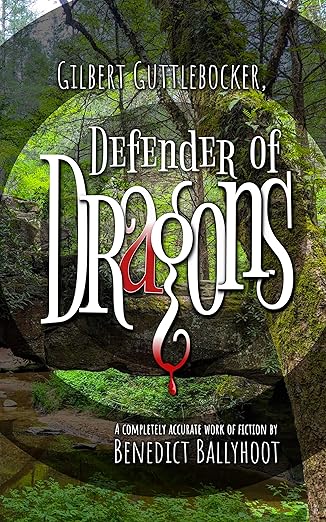
Gilbert Guttlebocker, Defender of Dragons
Riveting, yet absurd; romantic, yet innocent; Gilbert Guttlebocker, Defender of Dragons is a little Roald Dahl, a little Harry Potter, and a little Chronicles of Narnia, all rolled into one. Timothy McCabe collaborates with the great Benedict Ballyhoot to bring you the novel of the century!
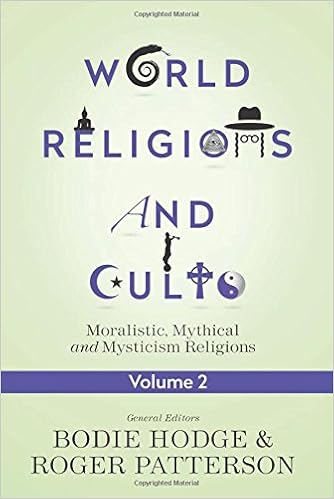
In Printed Form
Along with numerous other authors including Don Landis, Bodie Hodge and Roger Patterson, Timothy McCabe contributes analyses of various world religions and cults in this volume from Master Books.
Other Writings
"Why does the creator of the entire universe get the value of pi wrong (2 Chron 4: 2)?"
God didn't get Pi wrong. Rather, He rounded to the nearest cubit. "Also he made the cast metal sea, ten cubits from brim to brim, circular in form, and its height was five cubits and its circumference thirty cubits." -2 Chronicles 4:2 If we were to write down the whole value of Pi, or in this case, Pi times 10, we would never finish writing. Therefore, whenever anyone, Creator of the universe or not, writes down the value of Pi for us to read, it is always rounded.
Continue reading...
"When did your religion or worldview first begin?"
This question requires a two-pronged answer. When God created man, at the beginning of creation, man recognized God and worshipped Him in the way God ordained. In this sense, the worship of the Christian God and reliance on His grace (which is the essence of Christianity) has been around since the time of the very first man, Adam.
Continue reading...
"In Genesis 9:11-13 It says God has a covenant that he will never submerge the world by flood again and his token of the covenant is the rainbow. But it is scientifically impossible for rainbows to have not existed before this. Please explain?"
To begin with, Genesis 9 does not claim that there were no rainbows before the flood of Noah. It simply says that from the time of Noah onward, the rainbow will be a sign of God's promise. However, it is certainly not impossible for there to have been no rainbows prior to the flood. The Bible states that prior to the creation of Man, the earth was watered by a fine mist that came up from it, and there was no rain yet.
Continue reading...